What to Wear for Actor Headshots: A NYC Photographer's Guide
The short version: bring lots of options, dress for the roles you actually audition for, and don't be afraid of color, pattern, and a little personality. The old "blank slate" rule is gone. After photographing New York actors since 2006, I can tell you that wardrobe is one of the most important parts of a headshot, and also the part actors lose the most sleep over. It doesn't have to be that way. Here's how I think about it, and how we'll plan yours together.
Why I don't limit the number of looks
Unlike most photographers, I don't cap the number of looks in any of my packages — and that's on purpose. We often don't truly know what's going to work best until we try it on camera, and after all these years, I'm still pleasantly surprised on a regular basis. So I'd rather give us room to play. Bring plenty of choices. For a one-hour session, bring at least five different tops; for longer sessions, bring even more. Having options means we can adjust on the spot when something isn't working quite the way we imagined, and it gives us the freedom to try a look we didn't plan.
There's a less obvious benefit, too. I’ve discovered that changing tops tends to relax people. That little reset of stepping away and swapping your shirt can be all it takes to get things flowing.
Dress for your type, not just your taste
The most useful wardrobe question isn't "what do I look good in?" — it's "what am I getting called in for?" With online casting profiles, your headshots are a chance to show a few distinct types, so it's worth putting real thought into which roles you're most suited to. Then dress for them. If your type is a high schooler, that might be a tee or a Peter Pan collar layered under a cardigan or a snug jean jacket. If your type is a blue-collar worker, think a well-worn T-shirt under a hoodie or a beat-up jacket. You get the idea. I've done a lot of research on the common types and the clothing that tends to land for each, and I'm always happy to share what I know when we plan your session.
The "blank slate" rule is over: patterns and jewelry are welcome now
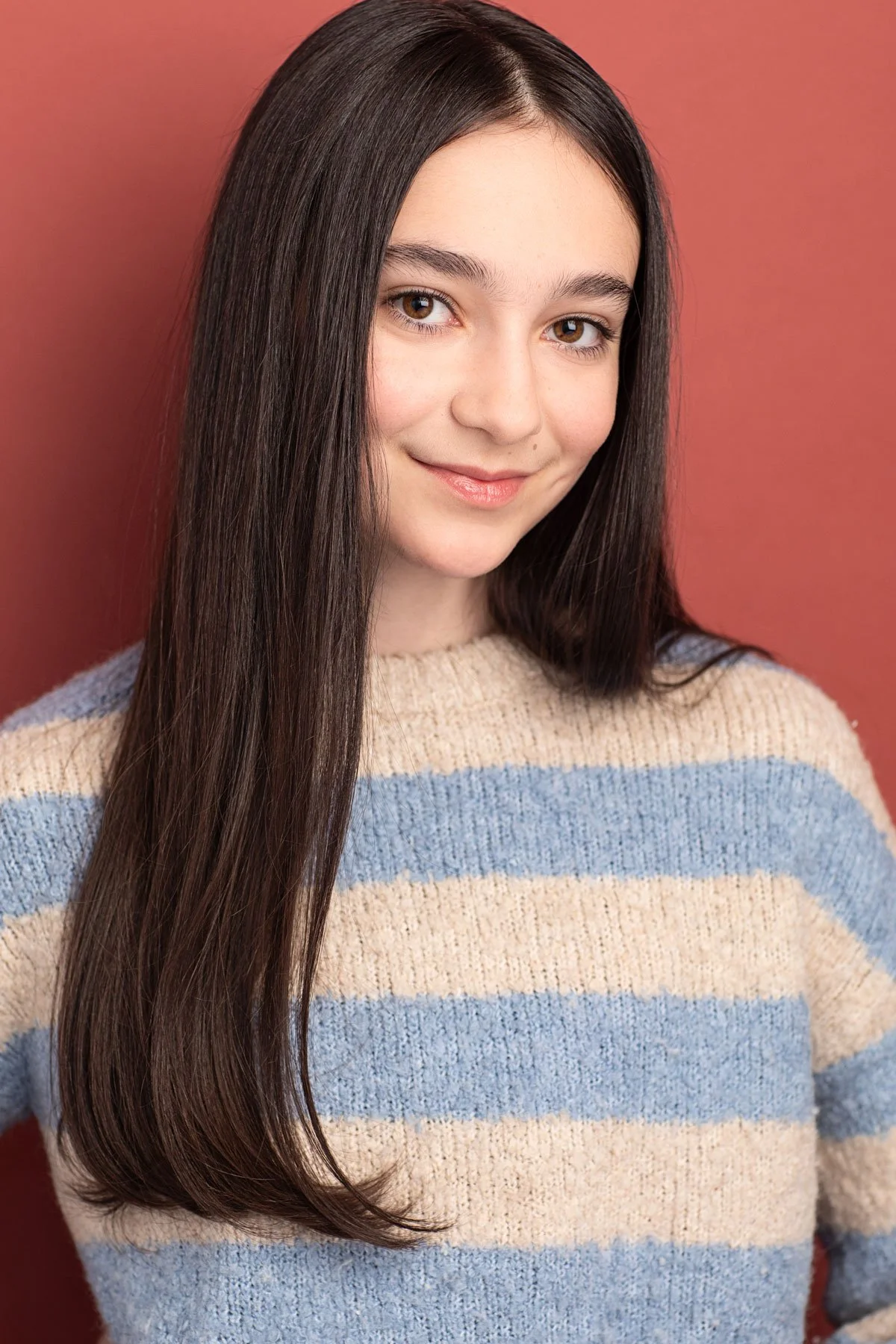
Headshot conventions have shifted in the last few years. It used to be that an actor headshot was supposed to be a blank canvas — a solid-color tee, no patterns, no jewelry. Nowadays, casting directors want to see you dressed for the part, so the rules have loosened considerably. Patterns, stripes, layers, earrings, necklaces — all of it is fair game, as long as it suits your casting.
The one caveat is that some patterns photograph beautifully and some are genuinely distracting, and it's not always obvious which is which until we see it on camera. This is one of the big reasons I like to see your pieces over Zoom before the shoot — I can usually tell at a glance whether a particular pattern is going to work for you or steal focus.
What colors work best?
In general, deeper, darker colors in colors that flatter your complexion tend to photograph better than bright white or pastels. For legit and dramatic work, darker, richer colors tend to read best — navy blue, forest green, burgundy. For commercial work, cheerful colors do the job — pink, baby blue, orange. A few honest cautions from experience: limit white, because it usually photographs too bright and pulls attention off your face (it works best layered under a jacket or sweater); and don't show up with only black and neutral tops, because in a color headshot they can read flat and forgettable. Bring plenty of color alongside them. (I'll admit redheads and blondes can often get away with wearing black because there's already so much color in the hair that it balances out.)
Finally, reach for textured fabrics — knits, tweed, a wooly sweater, something sheer. Texture adds dimension and interest that a flat surface can't.
The glasses trick worth knowing
If you want a few shots in glasses — and they're great for commercial looks and for types like the bookish character, the tech mind, or the lawyer — buy a cheap pair at the pharmacy and pop the lenses out. Lens reflections are tough to light around and tougher to retouch, so empty frames give us the look without the glare.
Accessories: jewelry and ties
The old no-jewelry standard is gone, so bring a variety of earrings and necklaces to match your different looks. The key with necklaces is to choose pieces large enough to actually read on camera — delicate chains often get lost. This holds for corporate and business headshots too, where a substantial necklace can complete the picture (and in finance, a string of pearls is hard to beat). For the men: bring a few ties in different colors. It seems like a minor detail, but tie color can genuinely change the feel of a photo.
Don't forget to check your pockets!
A few small things make a surprising difference. Wear pants with pockets — having somewhere to anchor your hands makes you feel more grounded when posing, and it will show in your body angle and expression. Bring at least one pair of well-fitting pants that go with everything, so we can grab some 3/4 shots (framed from roughly the thighs up), which are a nice addition to a website or casting profile. And a note for women: bring a smooth, nude bra that won't show through, and be mindful of which bra each top needs.
Plan ahead — and let's plan together
Bottom line is: do yourself a favor and put real time into your wardrobe before the shoot.
Look through your closet: do you already own the right pieces, or is it worth a little shopping? (If you do buy a few things, leave the tags on and return what you don't use.)
Make sure everything is clean and pressed, and pack it so it doesn't wrinkle on the way — please don't cram it all into a backpack. Wrinkles are distracting in the final image and genuinely hard to remove in retouching, so bring a wrinkle-release spray; I also keep a steamer at the studio if you arrive about half an hour early.
And this is really important: if you have an agent or manager, don’t forget to ask them what they want to see in your headshots — what to wear, which types to capture, which backdrops they prefer. They know what sells you, and they usually have strong, useful opinions.
Here's the part I love most: every package includes a complimentary Zoom consultation where we go through your casting and build your looks together. If you're stuck and convinced you have nothing to wear, bring your phone to your closet and show me — I'll point things out, and we almost always turn up a hidden gem. If there are gaps in what you need, we make a short shopping list. By the time you arrive, you'll know exactly what to bring and why.
The bottom line
The best wardrobe is the one that lets the real you come through, dressed for the roles you're right for. Casting directors aren't looking for the best-dressed actor in the room; they're looking for someone whose photo matches the person who walks through the door and is appropriate for the role they’re casting. Plan thoughtfully, bring more than you think you’ll need, and leave the rest to our Zoom call and shoot day.
Ready to plan your looks? Reach out and we'll find a date — and start building your wardrobe long before you step in front of the camera.